₹9,600.00

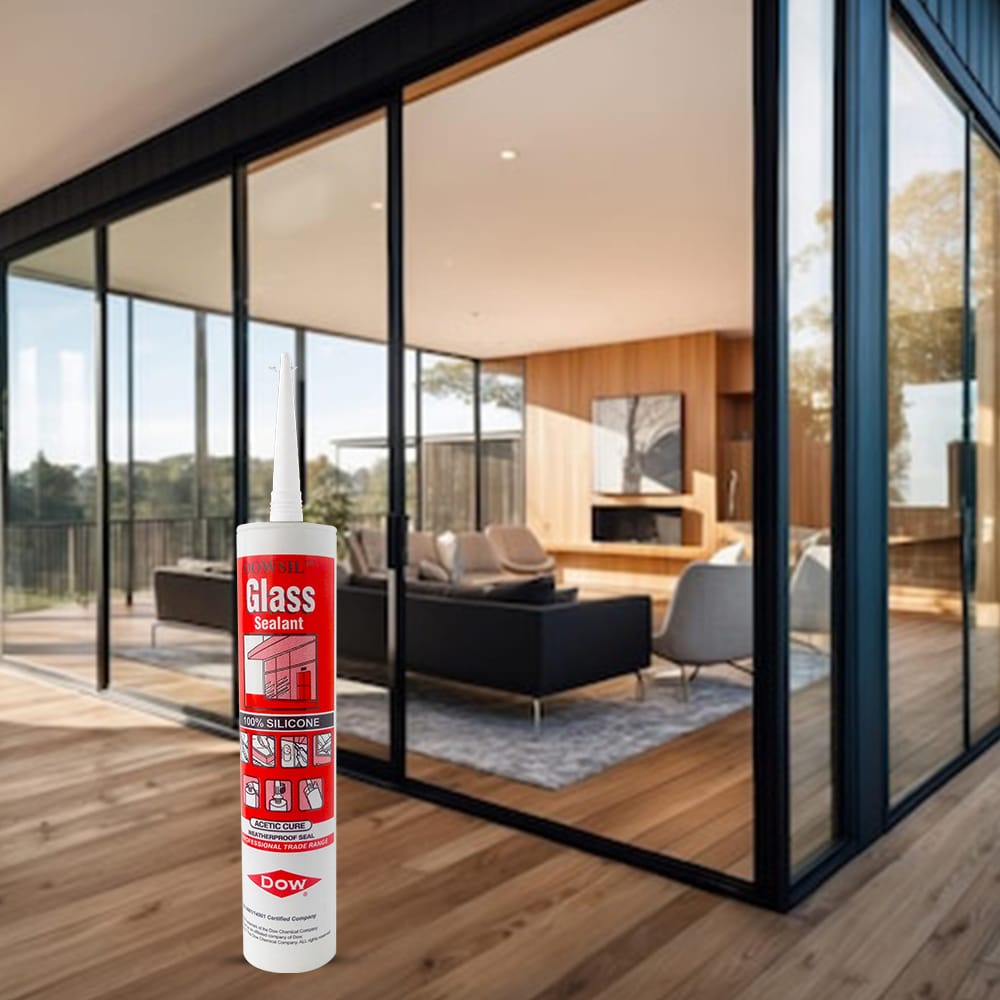
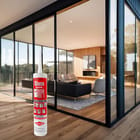
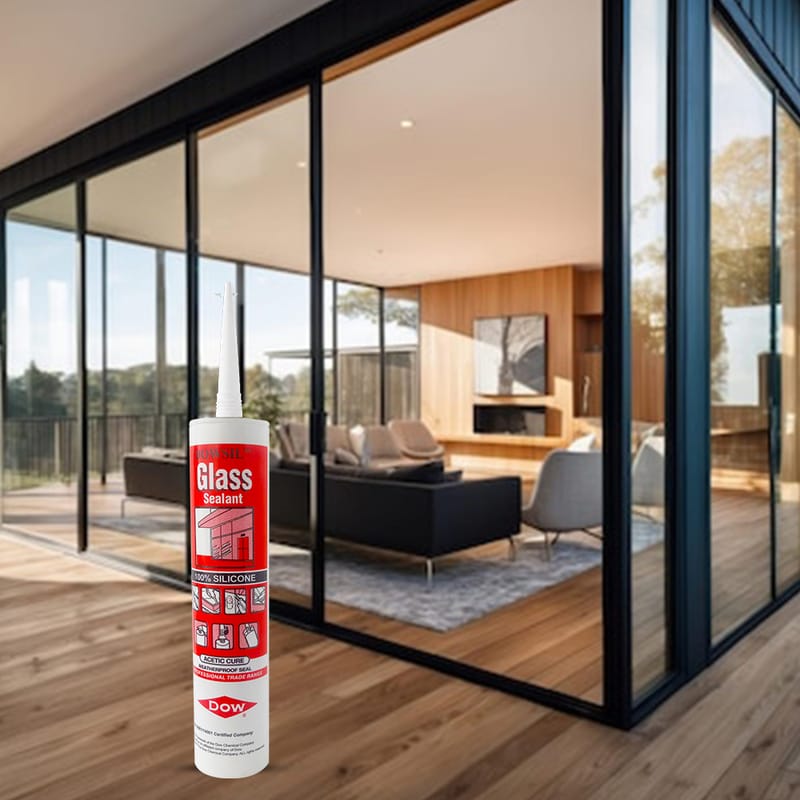
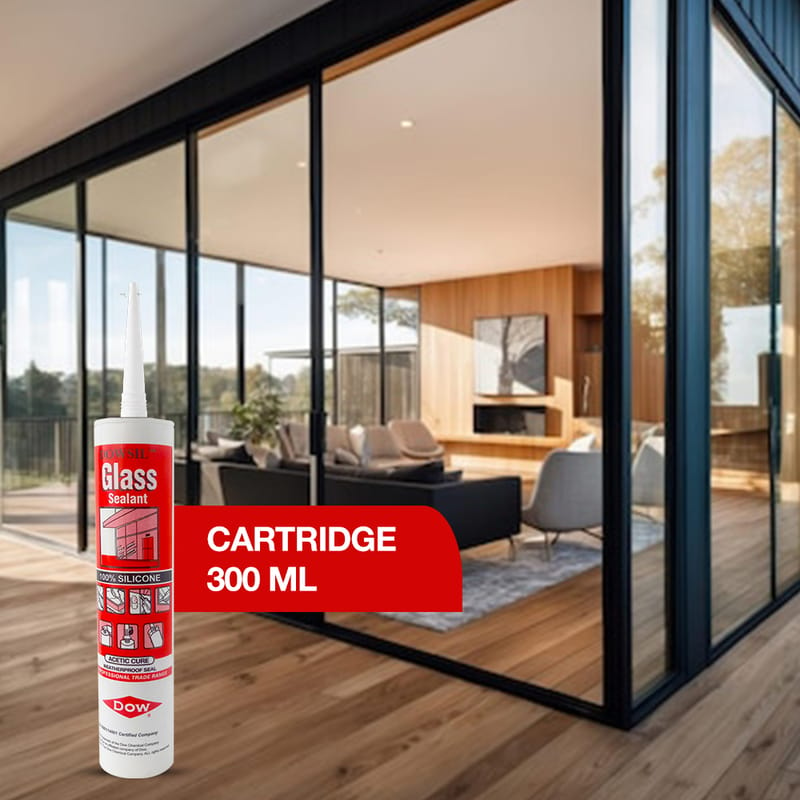
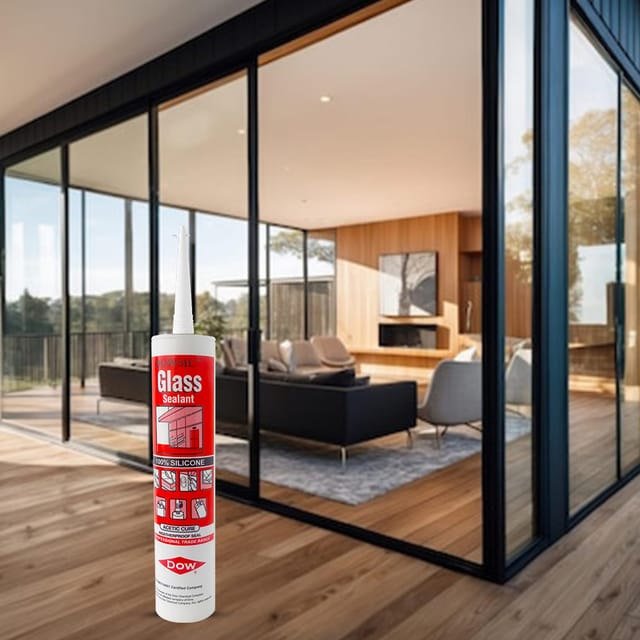
DOWSIL™ Glass Silicone Sealant
In Stock
MRP ₹9,600.00
Product Information
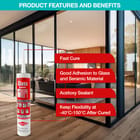
Product Features & Benefits:
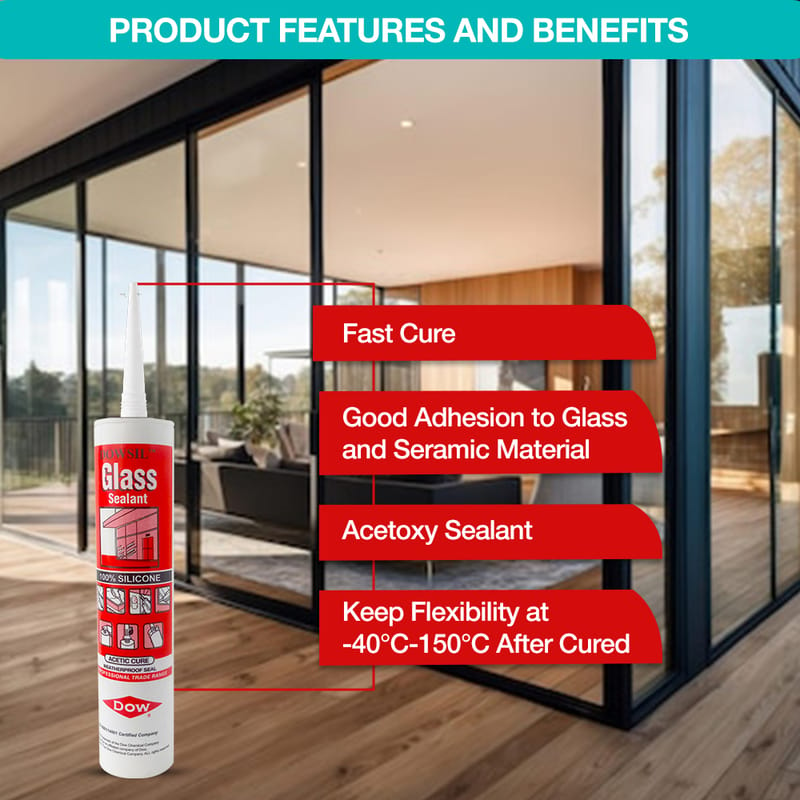
- One part, Room temperature cured
- 100% silicone sealant
- Good adhesion to glass and ceramic substrates
Applications:
- Glass cabinet and window adhesion
- Indoor and outdoor glass break adhesion
- Glass and Ceramic adhesion and sealing
Product Properties:
- One-part room temperature cured silicone sealant
- Fast cure
- Cure-in-depth, 24 hrs, 23°C, 50% R.H.
- Cured 7 days – 23°C, 50% R.H.
Shelf Life: 24 months in original package.
Storage: Store properly in a dry and well-ventilated place below 30°C.
Country of Origin: South Korea
DOWSIL™ Glass Silicone Sealant
Step 1
Correct Joint Design:
Correct joint design minimizes stresses on the sealant and enables optimum sealant movement
Capability facilitates sealant application and minimizing the potential for sealant splitting and voiding by enabling cure by-products to exit from the joint.
Guidelines are:
- Minimum joint : 6 mm
- Minimum joints depth : 6 mm
- For larger joints the width of the joint must be greater than the sealant depth, recommended the ratio of joint width to depth is 2:1.
- Avoid 3-sided adhesion: Apply backer rod / bond breaker tape in the base of the joint to ensure the sealant is only bonded to the sides of the joint and is free to move to its full capacity under joint movement.
Step 2
Clean All Joint Surfaces:
Substrate surfaces must be completely clean, dry, and sound. Remove any loose
debris and/or old sealant entirely.
Step 3
Install Backing Material:
Backer rod like closed cell polyethylene type or open cell polyurethane foam type or similar material (e.g. low tack polyethylene tape for shallow joints) can be used at the base of the joint to control sealant depth and avoid 3-sided adhesion by preventing adhesion to the base of the joint.
Step 4
Mask Adjacent Surfaces with Masking Tape:
Masking will ensure a clean and neat appearance while reducing clean up by protecting surrounding areas from excess sealant.
Step 5
Sealant application:
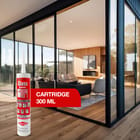
- Cut the tip off the cartridge.
- Cut the nozzle at a 45° angle to the desired shape and size.
- Screw the nozzle onto cartridge.
- Place cartridge in caulking gun. (Air-operated or hand-operated)
- Apply sealant into the base of the joint so that it completely fills the joint, wetting both sides. Do not simply lay a bead on the surface as the sealant will not penetrate the joint under its own weight.
Step 6
Tool Joint and Remove Masking Tape:
- Tool the surface of the joint immediately after sealant application to provide a smooth even finish and to ensure the sealant wets the sides of the joint.
- Tooling should be completed in one continuous stroke within the working time before the sealant forms a skin. A tool with a convex profile is recommended to keep the sealant within the joint. Tool the sealant when sealing horizontal joints to avoid any liquids (e.g. rainwater, cleaning solutions) from collecting on the top of the sealant.
- Do not use soap or water as tooling aids.
- Remove masking tape immediately after tooling and before the sealant skins.
- After a skin has formed, do not disturb the joint for 48 hours.
- Avoid contact with various cleaning agents or solvents while sealant is curing.
- Uncured sealant can best be cleaned from tools using commercial solvents such as xylene, toluene or methyl ethyl ketone. Cured sealant is not soluble and must be trimmed with a blade avoiding undercutting the seal.
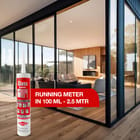
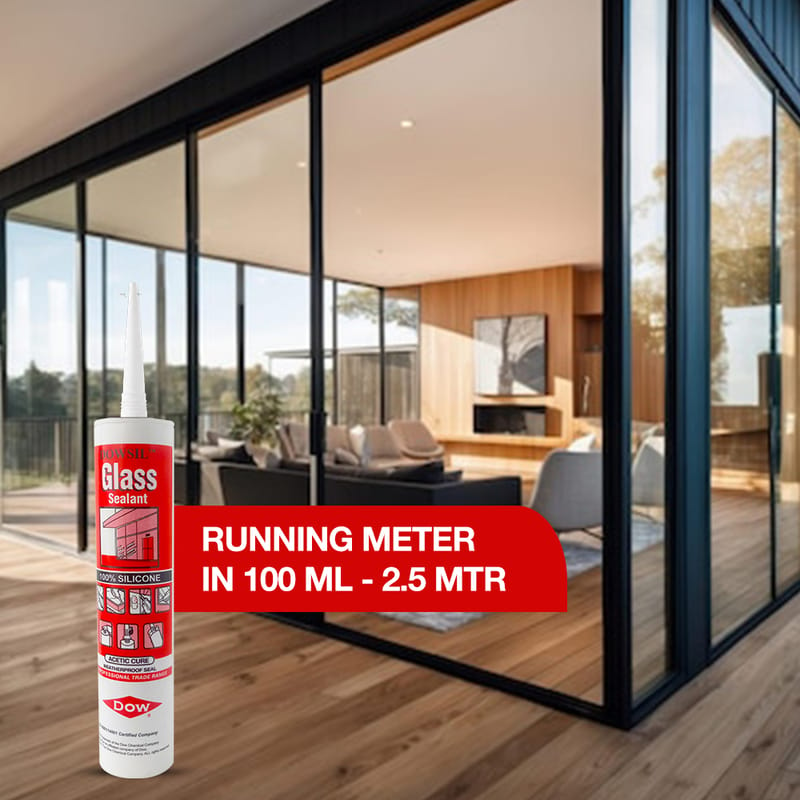
NOTE: Actual sealant usage will vary depending on factors such as joint geometry, backer rod placement, tooling, and wastage at the job site
DOWSIL™ Glass Silicone Sealant
DOWSIL ™ Glass Silicone Sealant is neither tested nor represented as suitable for medical or pharmaceutical uses. Below are the limitations for the same:
DO NOT USE FOR THE FOLLOWING:
- Curtain wall glazing
- Continuous water immersion
- Materials that bleed plasticizers or solvents or release by-products that may inhibit its cure, affect adhesion or may discolor the sealant
- Unventilated places
Test before use.
The user is responsible to conduct property test before using to confirm
the sealant produces satisfied results.
Be aware of the application temperature
When the substrates surface is over than 50°C, it is easy to cause fast-cure or
bubbles. When the substrates temperature is lower than 5°C, it is easy to slow-cure.
Keep environment well-ventilated and avoid inhaling too much volatile gas generated during cure.
South Korea